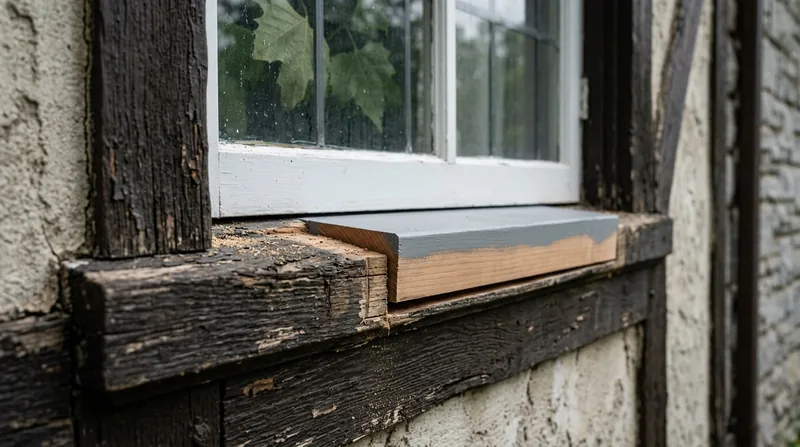




Tulsa's humid subtropical summers, freeze-thaw winters, and high moisture retention in red-clay soil create ideal conditions for wood rot and dry rot repair to become a chronic issue across residential carpentry. Whether you own a historic Tudor Revival home in Maple Ridge, a Craftsman bungalow in Brookside, a mid-century ranch across Ranch Acres, or a newer brick-veneer subdivision in Broken Arrow or Owasso, wood decay attacks untreated framing, siding, trim, and structural members with predictable regularity. We cut out decayed wood, treat surrounding lumber, and rebuild with rot-resistant stock, delivering a permanent structural repair rather than a cosmetic patch. The same carpenters who diagnose the pathology do the work, and we explain what caused the rot so you can prevent the next failure.
Why Wood Rot and Dry Rot Damage Spreads Fast in Tulsa's Climate
Tulsa sits at the intersection of humid subtropical and continental climates, with hot, moisture-laden summers followed by freeze-thaw winters that stress wood joints and siding. Exterior trim, sill plates, rim joists, and soffit boards absorb seasonal moisture and lose it unevenly, creating stress fractures that trap water. Once decay fungi establish themselves, they spread along the grain, following the path of least resistance. A small soft spot in fascia or a compromised sill plate can compromise an entire floor joist or rim joist within two to three seasons if left untreated.
- Tulsa's red-clay soil holds moisture against foundation and sill plates year-round, accelerating decay in untreated wood.
- Oak, sycamore, and pecan trees common to Green Country shed leaves and branches into gutters, trapping moisture against fascia and soffit.
- Spring and early summer humidity spikes create ideal conditions for fungal growth in poorly ventilated crawl spaces and attics.
- Freeze-thaw cycles in winter force water into existing cracks and gaps, widening them and allowing deeper penetration into framing.
Catching decay early means we can repair the affected member and treat surrounding wood. Waiting until structural failure is imminent means replacement, which costs far more.
Key info: A soft spot in a rim joist or floor joist discovered during a home inspection in Broken Arrow or Tulsa typically runs from $800 to $2,400 to repair, depending on extent and framing access. The same joist left untreated for two years may require complete replacement at $3,500 to $6,000 or more.
How We Repair Wood Rot and Dry Rot in Tulsa Homes
Our repair process begins with a thorough inspection to establish the extent of decay, the species and condition of surrounding wood, and whether structural members are compromised. We document findings with photos and notes, which homeowners can share with their insurance adjuster if the damage is claim-eligible. Once scope is clear, we remove decayed wood back to sound material, treat exposed framing with a wood hardener and fungicide, and rebuild with pressure-treated or naturally rot-resistant lumber matched to the original member's size and species where possible.
- We inspect the damage zone with a moisture meter and awl to map the true boundary between decayed and sound wood.
- We remove all soft, punky, or discolored wood, cutting back to firm heartwood or sapwood that will hold fasteners.
- We treat exposed framing and the perimeter of the repair zone with a wood preservative rated for the application.
- We rebuild the member in place using pressure-treated lumber, sistered joists where needed, and stainless or hot-dipped galvanized fasteners.
- We seal cut ends and joints with exterior-grade caulk or epoxy to prevent re-entry of moisture.
The entire process typically takes one to three days, depending on the size of the repair and framing accessibility. For more information on related structural work, see our page on floor joist and subfloor repair.
Local example: A homeowner in Jenks discovered soft wood in the rim joist behind a kitchen sink. We removed 18 inches of decayed framing, treated the remaining joist and band board, and sistered in a new pressure-treated 2x10 bolted to the existing rim. The repair took two days and cost $1,200, preventing a far costlier foundation settlement or floor sagging.
Repair Methods and When We Use Them
| Approach | Description | Best for |
|---|---|---|
| Localized removal and rebuild | Cut out decayed section, treat surrounding wood, sister in new pressure-treated lumber bolted to the existing frame. | Rot confined to one side or end of a joist, rim joist, or trim board; structural integrity of the parent member is sound. |
| Full member replacement | Remove the entire compromised joist, beam, or trim board and install a new pressure-treated or rot-resistant replacement, secured to existing framing. | Decay spans more than half the member's length or depth; structural loads are high; access allows safe removal without temporary support. |
| Epoxy consolidation and capping | Stabilize soft wood with epoxy hardener, fill voids, and cap exposed surfaces with exterior-grade epoxy or polyurethane to prevent water re-entry. | Cosmetic or low-load trim; soft spots that do not affect structural capacity; finish carpentry and siding edges where removal is impractical. |
| Sistering and reinforcement | Bolt a new pressure-treated joist or beam alongside the compromised member to carry loads and distribute stress over the longer span. | Load-bearing joists or beams where decay is localized; floor sagging or deflection; avoiding disruption to flooring or interior finishes. |
Each repair method is selected based on the extent of decay, the structural role of the member, building access, and cost. We always propose repair before replacement when the wood justifies it.
Wood Rot and Dry Rot Repair Cost in Tulsa: What to Expect
Wood rot repair costs in Tulsa typically start at $650 for a small, accessible repair such as a soft section of fascia or a localized sill plate decay in a single-story home. Larger jobs involving floor joists, rim joists, or multiple affected members run $1,200 to $3,500. Full joist or beam replacement, or repairs requiring temporary support walls or extensive framing access, may exceed $5,000. The primary factors that move cost upward are the number of members affected, the depth and span of decay, the accessibility of the repair zone, and whether the member is load-bearing.
We recommend getting two or three estimates from local carpenters so you can compare scope, method, and price. A detailed estimate should specify which wood is being removed, what replacement material is being used, whether temporary support is needed, and what surface treatment (caulk, paint, stain) is included. For a full pricing overview and examples of typical jobs, visit our pricing page.
Wood Rot and Dry Rot Repair Near Me: What Tulsa Homeowners Should Know When Hiring a Carpenter
When you call a local carpenter for an estimate, ask whether they carry general liability and property damage insurance, and request proof on request. Verify they are registered with the City of Tulsa if local registration is required for the scope of work. Ask for references from recent jobs in your neighborhood, Broken Arrow, Owasso, or Jenks so you can speak with homeowners who had similar repairs done. If your home is in a historic district such as Maple Ridge or the Brady Arts District, check whether your repair requires approval from the local historic preservation board before work begins. For load-bearing structural work such as beam replacement or floor joist removal, confirm that your local building department permits the scope and whether an engineer's drawing is required.
- Request a detailed written estimate that breaks down labor, materials, and timeline before agreeing to work.
- Ask the carpenter to explain what caused the rot so you can address the underlying moisture or drainage issue.
- Check whether the estimate includes documentation (photos, notes) suitable for insurance claim submission.
- Confirm that the carpenter uses pressure-treated or naturally rot-resistant lumber and stainless or galvanized fasteners rated for exterior use.
- Verify that the job timeline allows for curing time if epoxy or wood hardener is used, and that final sealing and finishing are included.
A reputable local carpenter will be happy to answer these questions and walk you through the repair process. If you are ready to schedule a free estimate, contact Tulsa Carpentry at (918) 359-8424.
Wood Rot & Dry Rot Repair in Tulsa: Pricing Guide
| Service | Price | Details |
|---|---|---|
| Small localized repair | Starting at $650 | Soft fascia, sill plate, or trim board in accessible location; one to two square feet of decay |
| Medium repair with joist or rim involvement | Starting at $1,200 | Decay in floor joist, rim joist, or band board; 2 to 4 linear feet; sistering or partial member rebuild |
| Full joist or beam replacement | Starting at $2,800 | Complete member removal and replacement; load-bearing framing; may require temporary support and engineer consultation |
| Multi-member or structural repair | On estimate | Decay affecting multiple joists, beams, or sill plates; crawl space or attic access issues; load-bearing alterations |
| Travel and estimate | Included | No mileage fee or call-out charge for Tulsa and surrounding service areas; free estimate within 24 hours |
Indicative pricing, the exact cost depends on square footage, finish, and site access. Free personalized estimate within 24h at (918) 359-8424.


