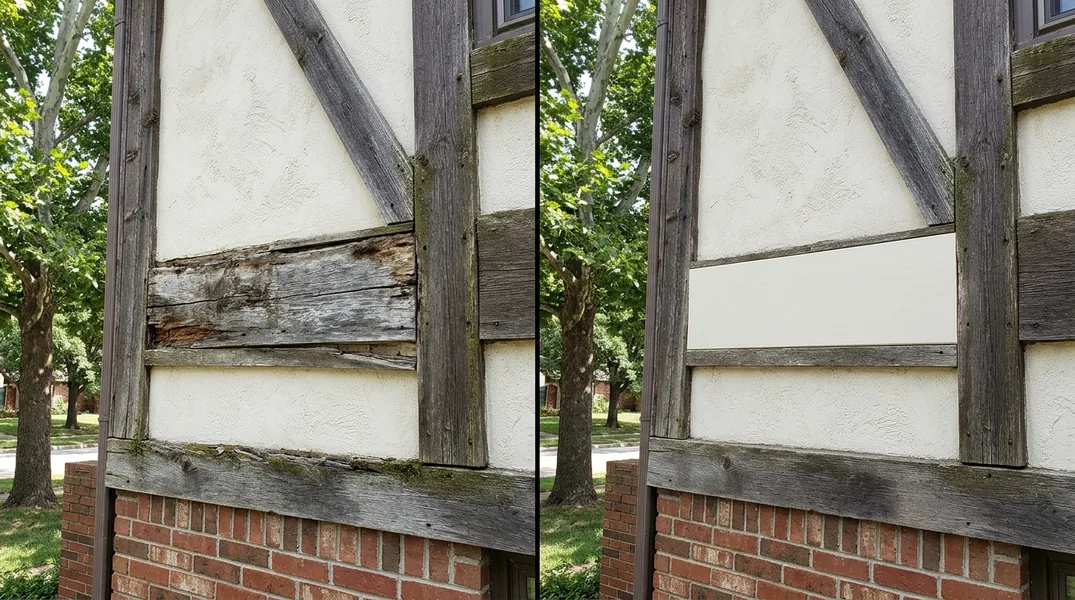
Dry Rot vs Termite Damage: Why the Difference Matters
If you've noticed soft, crumbling wood in your Tulsa home, you're right to be concerned. But before you panic, it's important to understand what's actually happening to your structure. The difference between dry rot and termite damage isn't just academic, it determines your repair strategy, cost, and timeline. Both can cause serious structural problems, but they require different treatment approaches and prevention methods.
Many homeowners assume any wood damage means termites are at work, but that's not always the case. Dry rot is a fungal disease that spreads through moisture and poor ventilation, while termites are living insects that actively consume wood as a food source. Getting the diagnosis right is your first step toward protecting your home's integrity and your wallet. At Tulsa Carpentry, we've helped hundreds of homeowners identify and address these problems correctly, and we're here to help you too.
What Does Wood Rot Look Like? Visual Signs of Dry Rot
Dry rot has a distinctive appearance that becomes easier to spot once you know what to look for. The wood typically develops a dark brown color and becomes brittle, often cracking in a distinctive cube-like pattern. When you press on affected wood with a screwdriver or your fingernail, it crumbles or caves inward easily, almost like compressed cork. This mushiness is a telltale sign that fungal decay has compromised the wood's structural integrity. You might also notice a musty, earthy smell around the affected area, which is the smell of active fungal growth.
Another characteristic of dry rot is that it can spread through plaster, mortar, and even concrete if conditions are damp enough, making it particularly insidious in basements and crawl spaces. The wood doesn't need to be wet to the touch for dry rot to thrive, it just needs consistent humidity and poor air circulation. In Tulsa's climate, with our spring rains and occasional flooding concerns, basements and foundation areas are prime locations for this fungal damage. If you spot these signs, Wood Rot & Dry Rot Repair should be your next search.
Signs of Termite Damage in Wood: What Active Infestation Looks Like
Termite damage has a distinctly different appearance from dry rot. Termites eat wood from the inside out, often leaving a thin veneer of sound wood on the surface while hollowing out the interior. If you tap on wood with termite damage, it may sound hollow or papery. Unlike dry rot's cube-shaped cracks, termite galleries (the tunnels they create) run along the grain of the wood and often contain mud tubes on the surface. These mud tubes are one of the most reliable signs of active termite infestation, as termites build them to travel safely between their nest and food sources.
Another key difference is that termite damage typically appears lighter in color than the surrounding wood, and the damaged areas are often lined with a thin layer of mud or soil. You might also notice small piles of what looks like sawdust near wooden structures, these are actually termite droppings called frass. Unlike dry rot, which is purely fungal, termite damage indicates an active pest problem that requires immediate attention. If you suspect termite damage in your home, professional Termite Damage Repair combined with pest control is essential.
Key Differences: Moisture, Spread, and Smell
Understanding the fundamental differences between these two problems helps you take the right action. Dry rot is purely a moisture and fungal issue, it thrives in damp environments with poor ventilation and spreads through airborne spores and direct contact with infected wood. Termite damage, by contrast, is caused by living insects that actively seek out and consume cellulose in wood. Termites need moisture too, but they're mobile pests that can travel between structures and even migrate to new areas of your home if conditions are right. Dry rot stays localized to damp areas, while termites can establish colonies and spread throughout your entire structure.
The smell is another useful diagnostic tool. Dry rot produces a musty, earthy odor similar to a damp basement or moldy attic. Termite infestations, especially active ones, often produce a faint but distinctive smell that some describe as cardboard or wood shavings mixed with mold. Additionally, dry rot typically appears in areas with visible moisture problems, condensation, or poor drainage. Termites, however, can infest wood that appears relatively dry because they maintain their own moisture within their galleries and tunnels. If you're uncertain about what you're dealing with, the safest approach is to contact Tulsa Carpentry for a professional inspection.
Where to Find Each Problem in Your Tulsa Home
Location is another critical clue in diagnosing wood damage. Dry rot gravitates toward areas with moisture problems: basements with seepage, crawl spaces with poor ventilation, bathrooms with plumbing leaks, and attics with roof leaks or condensation issues. It loves areas where water pools or where humidity stays consistently high. If you've had recent water damage, flooding, or notice persistent dampness in a particular area, dry rot is a strong possibility. The fungus needs that moisture to survive and spread, so eliminating the source of moisture is part of the repair solution.
Termites, on the other hand, can appear almost anywhere in your home, though they do prefer areas with some moisture. They commonly attack foundation walls, wooden piers, floor joists, and exterior trim. Unlike dry rot, which is confined to damp zones, termites can establish colonies in relatively dry wood as long as they have a moisture source nearby, like a leaking gutter or poor grading around your foundation. In Broken Arrow and surrounding areas, both problems are common enough that homeowners should inspect their entire structure regularly. If structural elements like Floor Joist & Subfloor Repair are needed, the underlying cause must be correctly identified first.
When to Call a Professional: Wood Rot & Dry Rot Repair Near Me
While minor surface damage might be something you could address yourself, both dry rot and termite damage typically require professional intervention to ensure the problem is fully resolved. Attempting a DIY repair without addressing the root cause, whether that's moisture or an active pest infestation, means the problem will almost certainly return. Professionals have the tools, expertise, and access to specialized treatments that ensure the damage is completely removed and the conditions that caused it are corrected. This is especially true when structural elements are compromised, as improper repairs could affect your home's safety and integrity.
If you're in Tulsa and suspect wood damage, Tulsa Carpentry is ready to help. We can accurately diagnose whether you're dealing with dry rot or termite damage, assess the extent of the problem, and provide a comprehensive repair plan. Whether you need Beam Replacement & Load-Bearing Wall Removal or targeted moisture remediation, we have the skills and experience to restore your home. Call us at (918) 359-8424 or visit our website to request a free estimate today. The sooner you address the problem, the less extensive (and expensive) the repairs will be.
Looking for a professional carpentry contractor in Tulsa? Tulsa Carpentry responds fast for all your carpentry needs.
Get a Free QuoteOur services: Wood Rot & Dry Rot Repair · Termite Damage Repair · Floor Joist & Subfloor Repair