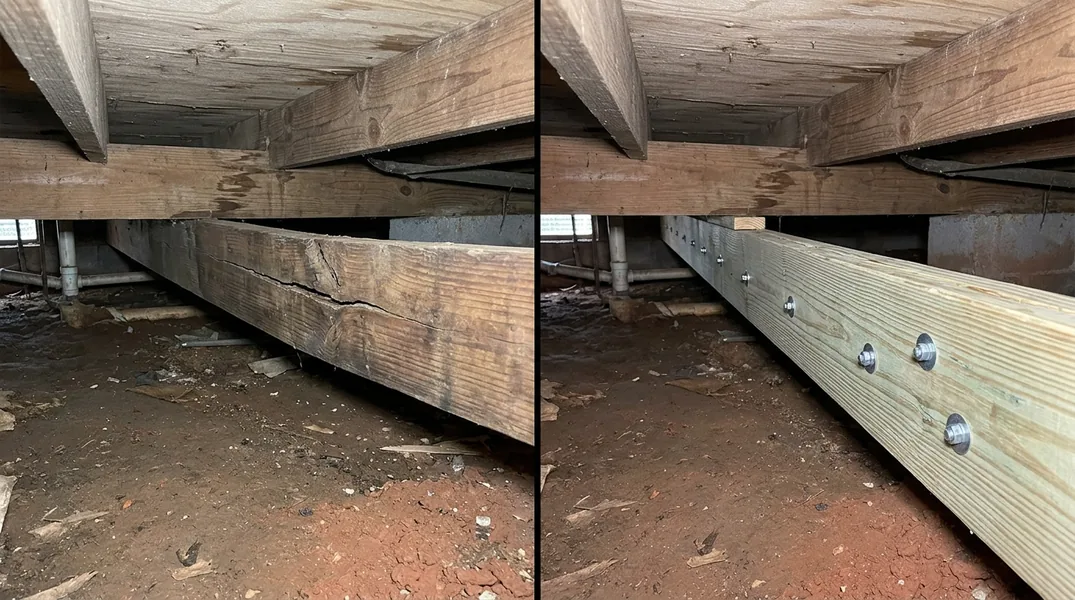
Why Is My Floor Sagging? Understanding the Tulsa Connection
If you own an older home in Tulsa, sagging floors are more than just an annoying cosmetic issue. They're a warning sign that something structural is happening beneath your feet. The problem often traces back to one of Tulsa's most distinctive features: red clay soil.
Red clay expands and contracts dramatically with moisture changes. When it rains heavily or the water table rises, the clay swells, pushing up against your home's foundation. When it dries out during hot summers, it shrinks and settles unevenly. This constant movement stresses the wooden support structures beneath your home, causing floor joists to weaken, crack, or even rot over time. Add in decades of moisture exposure, and you've got a recipe for sagging floors that get worse each year if left unaddressed.
Beyond soil movement, sagging floors in older homes typically result from three main culprits: Wood Rot & Dry Rot Repair issues, Termite Damage Repair that compromises structural integrity, or simply the natural settling and deterioration of wooden beams and joists over 50, 75, or even 100 years. The longer you wait to address the problem, the more expensive the repair becomes.
Floor Joist Repair and Sistering: What These Terms Mean
Floor Joist & Subfloor Repair is one of the most common solutions for sagging floors, and understanding the terminology helps you make informed decisions about your home. A floor joist is a horizontal wooden beam that runs beneath your flooring, supporting the weight of everything above it. When joists weaken or fail, the floor above sags, creaks, and becomes unstable.
Sistering floor joists is a repair technique where a carpenter installs a new wooden beam (called a sister joist) alongside a damaged or weakened original joist. The two beams are bolted or nailed together, essentially doubling the support capacity. This method works well when the damage is localized to one or two joists and the overall structure is still sound. It's less invasive than full joist replacement and typically costs less, making it a popular choice for many homeowners.
However, sistering isn't always the right solution. If multiple joists are compromised, if the main support beam is sagging, or if the damage is extensive, you may need Beam Replacement & Load-Bearing Wall Removal services. A professional carpenter will assess the full extent of the damage before recommending the best repair approach for your specific situation.
Red Clay, Moisture, and Structural Damage in Tulsa Homes
The relationship between Tulsa's red clay soil and floor damage is well-established among local contractors. The clay's high iron oxide content gives it that distinctive red color, but it also makes it incredibly expansive. When water infiltrates the soil around your foundation, the clay swells. This upward pressure can crack foundations, shift support posts, and create uneven settling that manifests as sagging floors inside the home.
Moisture is the enemy of wood, and Tulsa's humid summers combined with spring rains create ideal conditions for wood rot and deterioration. If water seeps into your crawl space or basement, it wicks up into wooden support structures through capillary action. Over time, this constant moisture exposure causes the wood fibers to break down. Rot fungi thrive in this environment, eating away at the structural integrity of your joists and beams. What starts as a small soft spot in a joist can eventually compromise the entire support system.
The problem compounds when homeowners don't address drainage issues. Poor grading around the foundation, clogged gutters, or missing downspout extensions allow water to pool near your home. This standing water accelerates clay expansion and increases moisture in crawl spaces. If you're experiencing sagging floors, it's critical to evaluate your home's drainage system as part of any repair plan. Fixing the structural damage without addressing the moisture source is like putting a band-aid on a broken bone.
Floor Joist & Subfloor Repair Cost in Tulsa: What to Budget
The pricing for sagging floor repair varies widely depending on the extent of damage, the repair method, and how many joists need attention. Sistering a single floor joist typically ranges from $800 to $2,500, depending on joist length and accessibility. If you need to sister multiple joists, expect to budget $3,000 to $8,000 or more. Full joist replacement, which involves removing the damaged beam and installing a new one, costs more but is sometimes necessary.
More extensive repairs involving main support beams or Beam Replacement & Load-Bearing Wall Removal can easily run $5,000 to $15,000 or higher, depending on the beam's size and the complexity of the work. These larger projects often require temporary support systems, engineering assessments, and building permits, all of which add to the overall cost. Additionally, if the damage is caused by wood rot or termites, remediation of those issues adds to the bill.
The best way to understand what you'll actually pay is to schedule a free estimate with a qualified local carpenter. Tulsa Carpentry offers comprehensive inspections and detailed quotes so you know exactly what's needed and what it will cost before any work begins. Call (918) 359-8424 to arrange an inspection of your sagging floors.
How to Know If You Need Professional Help Right Now
Some signs of floor sagging are obvious: you can see the floor visibly slopes, or you feel the sag when you walk across a room. Other warning signs are more subtle. If you notice doors that don't close properly, cracks in drywall or plaster, gaps between walls and ceilings, or a bouncy or spongy feeling underfoot, these are red flags that your floor structure is compromised. Creaking sounds when you walk, especially concentrated in one area, often indicate a joist that's failing or moving.
The longer you wait, the worse the problem becomes. A minor sag can become a major structural issue in just a few years, especially if moisture problems persist. Additionally, insurance companies and future home buyers will expect professional repairs, not DIY fixes. Attempting to jack up and repair sagging floors without proper knowledge and equipment can actually cause more damage and create safety hazards.
If you're noticing any of these signs in your Tulsa home, don't wait. Contact Tulsa Carpentry today for a professional evaluation. The sooner you identify and address the problem, the more repair options you'll have and the lower your costs will likely be. Call (918) 359-8424 or visit our website to request a free estimate.
The Repair Process: What to Expect
Once a professional carpenter has assessed your sagging floor and determined the cause and extent of damage, the actual repair process typically unfolds in several stages. First, the carpenter will address any underlying moisture or drainage issues. This might involve improving crawl space ventilation, installing a sump pump, sealing cracks in the foundation, or improving grading around your home. Without fixing these root causes, new repairs will eventually fail.
Next comes the structural repair itself. If sistering joists is the solution, the carpenter will install temporary support posts to lift the floor gradually back to level (or nearly level). This is done carefully to avoid cracking drywall, breaking windows, or damaging other parts of the home. The new sister joist is then bolted or nailed securely to the existing joist. The temporary supports are removed once the repair is complete and the floor is stable.
For more complex repairs involving main beams or multiple joists, the process is more involved and may take several days or weeks. Professional contractors carry liability insurance and obtain the necessary building permits to ensure the work meets code. This protects you as a homeowner and ensures the repair will last for decades. When you choose Tulsa Carpentry for your floor repair needs, you're investing in quality workmanship and peace of mind.
Looking for a professional carpentry contractor in Tulsa? Tulsa Carpentry responds fast for all your carpentry needs.
Get a Free QuoteOur services: Wood Rot & Dry Rot Repair · Termite Damage Repair · Floor Joist & Subfloor Repair